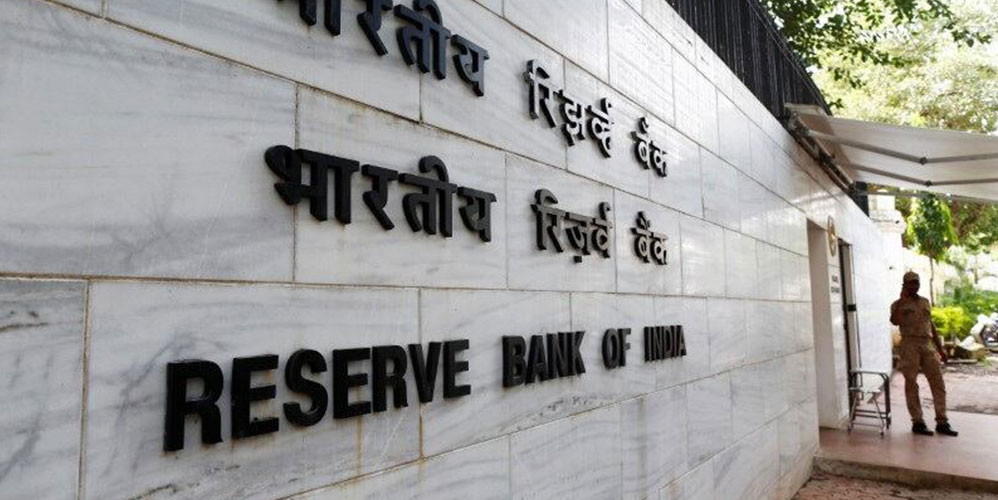
India Holds Rates at 5.5% as U.S. Trade Pressure Mounts
India’s central bank left its benchmark interest rate unchanged at 5.5% on Wednesday, a move widely anticipated by economists as the country faces renewed trade friction with the United States.
The Reserve Bank of India’s decision follows a significant 50-basis-point cut in June and reflects a shift toward a more neutral policy stance. RBI Governor Sanjay Malhotra said the decision was unanimous, highlighting ongoing global trade headwinds but noting a modest easing of geopolitical risks.
Markets responded modestly, with the Nifty 50 slipping 0.18% and the Sensex showing a slight decline. The rupee edged up slightly to 87.72 against the dollar.
The rate hold comes as tensions rise between India and the U.S., after President Donald Trump criticized India’s energy and defense dealings with Russia and threatened new tariffs and penalties. The central bank acknowledged that external demand remains uncertain amid evolving trade announcements and negotiations.
“Global instability, prolonged geopolitical strains, and volatility in financial markets continue to cloud the growth outlook,” Malhotra noted during the policy briefing.
In line with its revised stance, the central bank emphasized a data-driven approach going forward. The Monetary Policy Committee will now assess future decisions based on incoming economic indicators and shifts in the global and domestic environment.
Analysts had largely expected the pause. In a recent note, Bank of America suggested that June’s aggressive rate cut was a proactive move, leaving little immediate room for further easing. However, the bank left open the possibility of another rate cut later in 2025, likely in the fourth quarter, depending on how the growth outlook evolves.
The RBI retained its GDP growth forecast for the fiscal year ending March 2026 at 6.5%. However, it lowered its inflation forecast to 3.1%, down from an earlier projection of 3.7%, citing easing price pressures.
India’s latest inflation data supports the case for potential further easing. Headline inflation fell to 2.1% in June, marking a six-year low. The central bank noted that near-term inflation is now expected to remain well below its 4% target throughout 2025.
On the growth front, India’s economy expanded by 7.4% year-on-year in the March quarter, beating expectations of 6.7%. That period concluded the 2024–25 fiscal year with full-year growth of 6.5%, in line with official projections.
With inflation subdued and growth holding steady, the RBI’s cautious approach signals a balancing act between preserving domestic momentum and managing external risks tied to global trade tensions.